masculinity · personal development · purpose
How to Find Your Life's Purpose: A Philosophical Framework for Men in 2026
How to Find Your Life's Purpose is a profound journey of self-discovery, aligning one's deepest values and unique talents with a meaningful contribution to the world. For men today, grappling with shifting societal expectations and a pervasive sense of aimlessness, understanding and pursuing purpose is not merely an aspiration but a fundamental psychological necessity for well-being, resilience, and authentic masculine expression.
Table of Contents
- The Crisis of Purpose in Modern Masculinity
- Defining Purpose: Beyond Hedonism and Utility
- The Four Pillars of Purposeful Living: A Masculine Matrix Framework
- Step-by-Step: Cultivating Your Purposeful Path
- Overcoming Obstacles: The Shadow Side of Purpose
- Integrating Purpose into Daily Life: Practical Stoicism for Men
The modern man often finds himself adrift in a sea of choices, bombarded by external expectations, and disconnected from the deeper currents of his own being. The societal narratives that once provided clear, albeit sometimes rigid, pathways for masculine identity have dissolved, leaving many without a compass. This article offers a philosophical framework for men to navigate this complex terrain, not by prescribing a specific purpose, but by equipping them with the tools to discover and forge their own. It is a call to introspection, a challenge to confront the void, and an invitation to build a life of profound meaning and impact.
The Crisis of Purpose in Modern Masculinity
The 21st century presents a unique paradox for men: unprecedented freedom coupled with a pervasive sense of aimlessness. The traditional blueprints for manhood have largely been dismantled, leaving a vacuum that is often filled by fleeting pleasures, consumerism, or a cynical detachment. This crisis of purpose is not merely an individual failing but a systemic challenge that demands a philosophical and practical response. Understanding its roots is the first step toward cultivating a meaningful life.
The Erosion of Traditional Pathways
Historically, male purpose was often externally defined: provider, protector, warrior, patriarch. While these roles offered a clear societal function, they also constrained individual expression. Today, with the advent of gender equality, economic shifts, and evolving social norms, these traditional pathways are no longer universally applicable or even desirable. The erosion of these clear-cut roles, while liberating in many respects, has left many men without a readily available script for their lives. This absence of a pre-defined path can lead to confusion, anxiety, and a profound sense of not knowing where to direct one's energy. The challenge now is to construct purpose from within, rather than inheriting it from without.
The Weight of Unlimited Choice
Modern society champions individual freedom and choice, presenting an almost infinite array of potential careers, lifestyles, and identities. While this might seem like a blessing, it can paradoxically become a burden. Psychologist Barry Schwartz coined the term "the paradox of choice," arguing that an abundance of options can lead to decision paralysis, regret, and decreased satisfaction. For men seeking purpose, this translates into an overwhelming sense that they should be able to find their perfect calling, and if they haven't, it's a personal failing. The pressure to choose the "best" path, combined with the fear of missing out on other opportunities, can immobilize men, preventing them from committing to any single direction long enough to cultivate deep meaning.
The Call for Intrinsic Motivation
In an age dominated by external metrics of success—wealth, status, followers—the pursuit of purpose necessitates a pivot towards intrinsic motivation. True purpose is not about achieving external accolades, but about aligning one's actions with deeply held values and a sense of contribution that transcends personal gain. This requires a profound shift from a "what can I get?" mindset to a "what can I give?" or "what must I do?" orientation. The modern man is increasingly called to look inward, to discern his unique gifts and passions, and to find ways to express them in service of something larger than himself. This internal compass, once calibrated, becomes an unshakeable source of direction, far more potent than any external reward.
📚 Recommended Reading: Man's Search for Meaning Viktor Frankl's timeless account of finding meaning amidst unimaginable suffering offers a profound perspective on the human will to purpose, essential for any man navigating life's challenges. [Amazon link: https://www.amazon.com/dp/080701429X?tag=seperts-20]
Defining Purpose: Beyond Hedonism and Utility
To truly understand how to find your life's purpose, we must first clarify what purpose is and, perhaps more importantly, what it is not. Purpose is often conflated with career success, financial gain, or even fleeting happiness. However, a deeper philosophical examination reveals purpose as something far more enduring, profound, and intrinsically tied to human flourishing. It transcends mere pleasure or utility, anchoring a man's existence in something substantial and meaningful.
Purpose as *Telos*: The Ancient Greek Perspective
The ancient Greeks, particularly Aristotle, conceived of purpose as telos – the inherent end or aim of a thing. For humans, telos was understood as eudaimonia, often translated as "human flourishing" or "living well," which is distinct from simple happiness (hedonia). Eudaimonia is achieved through virtuous action (arete) and the full actualization of one's potential. From this perspective, a man's purpose isn't something he invents out of thin air, but rather something he discovers by understanding his own nature and striving to live in accordance with it. It involves identifying one's unique capacities and deploying them in a way that contributes to a good life, both for himself and his community. This ancient wisdom reminds us that purpose is less about what we do and more about how we live and who we become.
Viktor Frankl and the Will to Meaning
No discussion of purpose is complete without acknowledging Viktor Frankl, the Austrian psychiatrist and Holocaust survivor. In his seminal work, Man's Search for Meaning, Frankl posited that the primary motivational force in humans is not pleasure (Freud) or power (Adler), but the "will to meaning." He observed that those who survived the concentration camps were often not the strongest or the healthiest, but those who had a reason to live – a future task, a loved one to reunite with, a book to finish. Frankl argued that meaning is not something we invent, but something we discover. It can be found in three ways: through creating a work or doing a deed, through experiencing something or encountering someone (e.g., love), and by the attitude we take toward unavoidable suffering. For men facing adversity or existential angst, Frankl's philosophy offers a powerful antidote, asserting that even in the most dire circumstances, meaning is always available.
The Intersection of Skill, Passion, and Need
While philosophical definitions provide a foundation, a practical understanding of purpose often emerges at the intersection of three key elements: what you are good at (skill), what you love to do (passion), and what the world needs (contribution). When a man can identify an area where his natural talents align with his deepest interests, and where that alignment can serve a greater good, he begins to uncover his unique purpose. This isn't about finding a single, static point, but rather a dynamic convergence. For example, a man passionate about storytelling, skilled in filmmaking, and recognizing a societal need for narratives that promote mental health might find his purpose in documentary filmmaking. This model encourages exploration and experimentation, recognizing that purpose is often revealed through action and engagement with the world.
The Four Pillars of Purposeful Living: A Masculine Matrix Framework
The Masculinity Matrix proposes that a robust and enduring purpose for men is built upon four interconnected pillars: Self-Knowledge, Responsibility, Contribution, and Resilience. These pillars provide a comprehensive framework for men seeking to not only identify their purpose but to embody it daily, transforming abstract ideals into concrete action and a life of substance. Neglecting any one pillar weakens the entire structure, leading to an incomplete or fragile sense of meaning.
Pillar 1: Self-Knowledge – The Inner Cartography
Before a man can effectively navigate the external world, he must first chart the landscape of his inner world. Self-knowledge is the foundational pillar, requiring honest introspection and a willingness to confront both strengths and weaknesses. This involves understanding one's core values, natural talents, deepest desires, fears, and even the shadow aspects of the self. It means asking profound questions: What truly moves me? What am I willing to suffer for? What unique gifts do I possess? What are my non-negotiables? This isn't a one-time exercise but an ongoing process of self-inquiry, perhaps through journaling, meditation, or deep conversations with trusted mentors. Without a clear understanding of who he is at his core, a man risks pursuing a purpose that is not authentically his, leading to dissatisfaction and burnout. This pillar is about becoming the expert on oneself.
Pillar 2: Responsibility – The Burden and the Blessing
True masculinity, as explored in The Masculinity Matrix, inherently involves the embrace of responsibility. This pillar moves beyond mere obligation to an active commitment to care for oneself, one's family, community, and even the broader world. It's the recognition that a man's actions have consequences and that he has the agency to shape those consequences. This responsibility is not a burden to be resented but a blessing that imbues life with meaning. When a man consciously chooses to take responsibility for his choices, his character, and his impact, he steps into his power. This might manifest as being a reliable father, a dedicated professional, a conscientious citizen, or a steward of the environment. The weight of responsibility, when willingly shouldered, provides a powerful gravitational pull towards purposeful action, giving direction and gravity to his existence.
Pillar 3: Contribution – The Outward Expression
Purpose is rarely a solitary endeavor; it finds its fullest expression in contribution to something beyond the self. This pillar emphasizes the outward-facing aspect of purpose – how a man's unique gifts and efforts serve others or a cause greater than his individual desires. Contribution can take myriad forms: building a business that creates value, mentoring younger men, volunteering for a charity, creating art, raising a family with integrity, or innovating solutions to complex problems. It's about leaving a positive mark on the world, however large or small. This pillar directly addresses the human need for transcendence and connection. When a man sees his efforts contributing to the well-being of others or the advancement of a meaningful cause, his sense of purpose deepens and his motivation becomes inexhaustible.
Pillar 4: Resilience – The Unyielding Spirit
The path to purpose is rarely smooth; it is fraught with setbacks, failures, and moments of doubt. The fourth pillar, Resilience, is the capacity to endure, adapt, and grow stronger in the face of adversity. This isn't about avoiding pain or difficulty, but about developing the mental, emotional, and spiritual fortitude to navigate them with integrity. A man committed to his purpose understands that challenges are not roadblocks but opportunities for growth and refinement. This pillar draws heavily from Stoic philosophy, emphasizing control over one's reactions rather than external events. It involves cultivating grit, perseverance, and a deep-seated belief in the value of one's chosen path, even when the immediate rewards are not apparent. Without resilience, even the most clearly defined purpose can crumble under pressure. This pillar ensures that a man's purpose is not merely an idea but a lived reality, forged in the crucible of experience.
Step-by-Step: Cultivating Your Purposeful Path
Finding your purpose is not a sudden revelation but a process of deliberate exploration, experimentation, and refinement. This framework provides a structured, five-step approach for men to actively engage in this journey, moving from introspection to action and sustained commitment. Each step builds upon the last, guiding you toward a more defined and actionable sense of purpose.
Step 1 of 5: The Reflective Audit – Unearthing Your Core
The journey begins with deep self-reflection. This step is about taking an honest inventory of your life, experiences, and inner landscape. Ask yourself:
- What activities make you lose track of time? (Flow states)
- What problems in the world genuinely anger or sadden you? (Indicators of what you care about)
- What skills do you possess that come naturally to you, even if you don't value them highly?
- What values do you consistently uphold, even when it's difficult? (Integrity, courage, honesty, loyalty)
- What kind of challenges do you enjoy solving?
- Who are your heroes, and what qualities do you admire in them?
- What are your biggest regrets, and what do they teach you about what you should have done?
- If money were no object, how would you spend your time?
Journaling is an invaluable tool here. Dedicate time each week to write freely about these questions, without judgment. The goal is to identify recurring themes, passions, and a nascent understanding of your unique contribution. This audit helps to clarify the raw material from which your purpose will be forged.
Step 2 of 5: The Vision Quest – Imagining Your Highest Self
Once you have a clearer picture of your inner landscape, the next step is to envision your ideal future self and the impact you wish to make. This is not about setting SMART goals, but about dreaming big and allowing your imagination to paint a vivid picture of a purposeful life.
- Imagine yourself at 80 years old, looking back on your life. What accomplishments would make you feel truly fulfilled? What kind of man would you have become?
- If you could solve one major problem in the world, what would it be?
- What legacy do you want to leave behind?
- How do you want to be remembered by those closest to you?
Create a "purpose statement" – a concise, inspiring declaration that encapsulates your emerging purpose. It should be broad enough to encompass various actions but specific enough to provide direction. For example: "To empower men to live authentically and build lives of integrity," or "To create innovative solutions that foster sustainable communities." This vision acts as a North Star, guiding your decisions and actions.
Step 3 of 5: The Prototyping Phase – Action as Discovery
Purpose is not found solely in thought; it is revealed through action. This step is about experimentation and testing your emerging purpose in the real world. Think of it as prototyping different versions of your purpose.
- Volunteer: Offer your skills to a cause aligned with your values.
- Take a class: Explore a new skill or area of interest.
- Start a side project: Dedicate a few hours a week to a passion project.
- Mentor someone: Share your knowledge and experience.
- Engage in deep conversations: Talk to people who are living purposeful lives that resonate with you.
The goal here is not immediate success, but learning and feedback. What aspects of these experiments energize you? What drains you? What new insights do you gain about yourself and the world? This phase is crucial for moving beyond theoretical purpose to embodied purpose, allowing you to refine your understanding through direct experience.
📚 Recommended Reading: The Obstacle Is the Way Ryan Holiday's modern interpretation of Stoic philosophy provides invaluable lessons on turning adversity into advantage, a crucial mindset for men committed to their life's purpose. [Amazon link: https://www.amazon.com/dp/1591846358?tag=seperts-20]
Step 4 of 5: The Feedback Loop – Refining Your Trajectory
As you engage in purposeful action, it's essential to establish a feedback loop to refine your trajectory. This involves regularly assessing your progress, adjusting your approach, and learning from both successes and failures.
- Regular Check-ins: Schedule weekly or monthly reviews of your purpose statement and your actions. Are they aligned?
- Seek Mentorship: Find men who embody aspects of the purpose you aspire to and ask for their guidance and honest feedback.
- Journaling for Reflection: Document your experiences, insights, and challenges. What did you learn this week? What needs to change?
- Embrace Failure as Data: View setbacks not as reasons to quit, but as valuable information that helps you refine your approach. What went wrong? What can be done differently next time?
This iterative process ensures that your purpose remains dynamic and responsive to your growth and the changing world. It prevents stagnation and keeps you actively engaged in the process of becoming.
Step 5 of 5: The Commitment – Embracing the Long Game
Finally, purpose requires commitment. Once you have a clear vision, have tested it through action, and refined it through feedback, the next step is to fully commit to the long game. This means making conscious choices that align with your purpose, even when it's difficult or unpopular.
- Prioritize: Structure your time, energy, and resources around your purpose. Say "no" to distractions that pull you away.
- Build Habits: Develop daily routines that reinforce your commitment and move you incrementally forward.
- Cultivate a Support System: Surround yourself with individuals who understand and support your purpose.
- Practice Patience: Understand that meaningful purpose takes time to unfold and bear fruit. Avoid the trap of instant gratification.
Commitment transforms purpose from a fleeting idea into a foundational principle of your life. It's the unwavering dedication that allows a man to weather storms, overcome obstacles, and ultimately build a life of profound meaning and impact.
Overcoming Obstacles: The Shadow Side of Purpose
The journey to find your life's purpose is rarely a straight line. It is often fraught with internal and external obstacles that can derail even the most determined man. Recognizing these common pitfalls and developing strategies to overcome them is as crucial as defining the purpose itself. These are the "shadows" that lurk on the path, testing a man's resolve and clarity.
The Fear of Failure and the Allure of Comfort
One of the most potent inhibitors of purposeful living is the fear of failure. Men are often conditioned to pursue success and avoid perceived weakness, making the risk inherent in pursuing a unique purpose daunting. What if it doesn't work out? What if I'm not good enough? This fear often drives men back to the familiar, the comfortable, and the safe, even if it means living a life of quiet desperation. The allure of comfort—the predictable job, the easy distractions, the avoidance of challenging growth—is a powerful siren song. Overcoming this requires a redefinition of failure, seeing it not as an end, but as valuable data and a necessary component of growth. It also demands a conscious choice to embrace discomfort as a sign of progress, understanding that true growth happens at the edge of one's capabilities.
The Trap of External Validation
In an age of social media and constant comparison, the trap of external validation is particularly insidious. Many men inadvertently seek purpose that will garner praise, status, or approval from others, rather than stemming from an authentic inner calling. This leads to a life lived for an audience, where decisions are based on what looks good or what others expect, rather than what truly resonates with one's core values. The problem with external validation is its fleeting nature; it's a bottomless well that can never truly be filled. A man whose purpose is rooted in external approval will always be chasing the next applause, never finding lasting satisfaction. The antidote is to cultivate an internal locus of evaluation, grounding one's purpose in personal integrity and a deep conviction in the value of one's work, independent of others' opinions. This is a core tenet of building a strong Masculinity Matrix.
The Myth of the Single, Static Purpose
Another common obstacle is the pervasive myth that a man must find one, singular, unchanging purpose early in life and stick to it rigidly. This can lead to immense pressure, decision paralysis, and a sense of failure if one's interests or circumstances evolve. The truth is, purpose is often dynamic and multi-faceted. A man might have a primary overarching purpose, but it can manifest in different ways throughout his life. His purpose might shift as he gains new experiences, develops new skills, or as the needs of the world change. Holding onto a rigid idea of purpose can prevent a man from adapting and growing. Embracing the idea of evolving purpose, and understanding that different seasons of life may call for different expressions of one's core values, liberates a man to continuously refine and deepen his sense of meaning without feeling like he's "failed" his original calling.
Integrating Purpose into Daily Life: Practical Stoicism for Men
Finding your life's purpose is only the beginning; the true challenge lies in integrating that purpose into the fabric of your daily existence. It's not about grand gestures alone, but about the consistent, intentional actions that align with your deepest values. This is where the practical philosophy of Stoicism offers a powerful toolkit for men, providing actionable strategies to ensure purpose is not just an idea, but a lived reality, even amidst the mundane.
Morning Rituals: Anchoring Your Intent
The way a man starts his day often dictates its trajectory. A purposeful morning ritual is not about rigid adherence to a complex schedule, but about creating space for intentionality. Stoic philosophers like Seneca emphasized the importance of preparing the mind for the day ahead. For men seeking to anchor their purpose, this might involve: ✅ Mindful Breathing/Meditation: Even 5-10 minutes can center the mind and create clarity. ✅ Reviewing Your Purpose Statement: A brief re-reading reinforces your direction and commitment. ✅ Setting Daily Intentions: Identify 1-3 actions that directly contribute to your purpose, however small. ✅ Gratitude Practice: Acknowledging what you have fosters a positive mindset and reinforces what truly matters. ✅ Physical Activity: Movement energizes the body and clears the mind, preparing you for purposeful action. This ritual serves as a daily recommitment, ensuring that your purpose is at the forefront of your consciousness before the distractions of the world begin.
Mindful Action: Purpose in the Mundane
Purpose is not reserved for heroic feats; it can be woven into the fabric of everyday tasks. This requires mindful action – bringing full awareness and intentionality to whatever you are doing, no matter how trivial it seems. For a Stoic, every action is an opportunity to practice virtue and align with one's logos (reason/purpose).
- Work: Approach your professional duties, even the less glamorous ones, with diligence and a commitment to excellence, seeing them as opportunities to hone skills or contribute to a larger system.
- Relationships: Engage with family and friends with presence and genuine care, recognizing that these interactions are fundamental to a meaningful life.
- Chores: Even simple tasks like cleaning or organizing can be performed with a sense of order and mastery, reflecting a commitment to one's environment. The key is to ask: How can I embody my purpose in this moment, in this task? This approach transforms the mundane into meaningful practice, reinforcing your purpose through consistent, conscious effort. It's a powerful way to live out your values, rather than just thinking about them.
Evening Reflection: Auditing Your Day's Alignment
Just as the morning ritual sets the stage, an evening reflection provides an opportunity to review and refine. This practice, advocated by Stoics like Epictetus, involves a candid self-assessment of the day's actions and their alignment with one's purpose.
- What went well today?
- Where did I fall short of my own standards or purpose?
- What could I have done differently?
- What did I learn?
- How did I embody my purpose, or fail to, in my interactions and tasks? This is not an exercise in self-flagellation, but in honest self-evaluation and continuous improvement. It allows a man to acknowledge his efforts, identify areas for growth, and make course corrections for the following day. This consistent audit ensures that purpose remains a living, breathing guide, constantly shaping and refining a man's journey towards a life of profound meaning. It's how a man builds integrity between his stated purpose and his lived reality. For deeper insights into this process, consider exploring works like Meditations by Marcus Aurelius.
Frequently Asked Questions
Q: What is the difference between purpose and passion? A: Passion is an intense enthusiasm or desire for something, often emotional and fleeting. Purpose is a deeper, more enduring commitment to a meaningful goal or contribution that aligns with one's core values and often involves sustained effort beyond personal gratification. Passion can fuel purpose, but purpose provides direction and resilience.
Q: Is it possible for my life's purpose to change over time? A: Yes, absolutely. While core values often remain constant, the specific expression or focus of your purpose can evolve as you gain new experiences, skills, and insights, or as the needs of the world change. It's a dynamic process of refinement, not a static destination.
Q: How do I know if I'm on the right path for my purpose? A: You'll often feel a sense of alignment, energy, and deep satisfaction, even when facing challenges. It won't always be easy, but it will feel right. A lack of meaning, persistent apathy, or a feeling of being unfulfilled despite external success can be indicators that you need to re-evaluate your path.
Q: What if I have multiple passions; how do I choose my purpose? A: You don't necessarily have to choose just one. Look for the underlying themes or values that connect your passions. Your purpose might be broad enough to encompass several interests, or you might find a way to integrate them. Alternatively, you can prioritize one as your primary purpose and engage with others as meaningful hobbies or secondary contributions.
Q: Is purpose something you find, or something you create? A: It's a blend of both. You discover aspects of your inherent talents, values, and what resonates with you (finding). You then create your purpose by actively choosing to align your actions, decisions, and life trajectory with those discoveries, shaping your contribution to the world.
Q: How does finding purpose relate to mental health for men? A: A strong sense of purpose is a significant protective factor for mental health. It provides meaning, direction, and resilience, reducing feelings of anxiety, depression, and aimlessness. It gives men a reason to persevere through adversity and a framework for making sense of their experiences.
Q: What if my purpose doesn't align with societal expectations or financial success? A: True purpose often transcends societal expectations. While financial stability is important, sacrificing your authentic purpose for external validation or material gain can lead to deep dissatisfaction. The challenge is to find a way to sustain yourself while pursuing a purpose that genuinely fulfills you, even if it means unconventional paths.
Q: How can I start if I feel completely lost and overwhelmed? A: Start small. Begin with the "Reflective Audit" (Step 1) – dedicate just 15-30 minutes a day to journaling about your values, interests, and what truly bothers you in the world. Don't aim for a grand revelation immediately; focus on consistent, small steps of self-discovery and mindful action.
Conclusion
The quest to find your life's purpose is perhaps the most profound journey a man can undertake. In a world that often seeks to define masculinity through superficial metrics, cultivating a deep, intrinsic sense of purpose offers an anchor, a compass, and an inexhaustible source of meaning. It is not about discovering a pre-written destiny, but about the courageous act of self-authorship – charting your own course, embracing responsibility, contributing your unique gifts, and building the resilience to navigate the inevitable storms. By engaging with the philosophical framework presented here, men can move beyond passive existence to a life of active, intentional creation, forging an identity that is both authentic and impactful. This is the essence of building a life of substance, not just for oneself, but for the betterment of the world.
The Masculinity Matrix releases October 1, 2026. Join the early access list to be notified the moment it drops — and get the free 20-page reader magnet The Five Masculine Wounds instantly.
This article contains Amazon affiliate links. If you purchase through them, The Masculinity Matrix earns a small commission at no extra cost to you.
Share This Dispatch
masculinity
The Masculinity Spectrum: Navigating Identity Beyond Toxic and Weak in 2026
masculinity
Anger as Information: How Men Can Use Their Anger Constructively in 2026
masculinity
The Enduring Role of Ritual in Men's Lives: Why Modern Men Are Starving for Ceremony in 2026
Further Reading

12 Rules for Life
Jordan B. Peterson
View on Amazon →
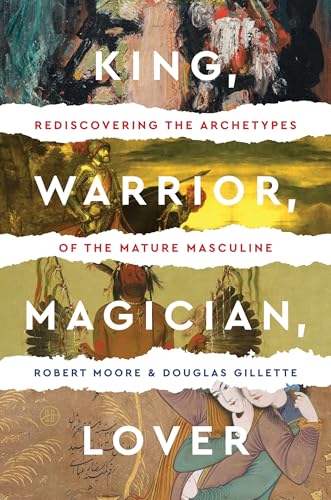
King, Warrior, Magician, Lover
Robert Moore & Douglas Gillette
View on Amazon →
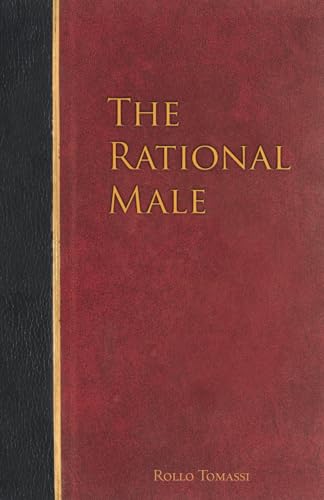
The Rational Male
Rollo Tomassi
View on Amazon →
As an Amazon Associate, The Masculinity Matrix earns from qualifying purchases.
Built With
This Site Was Built by Manus AI
The Masculinity Matrix — from the autoblog engine to the email sequences to this very page — was designed and built autonomously by Manus AI. If you're building something serious, it's worth a look.
Try Manus AI →