masculinity · personal development · archetypes
The 7 Masculine Archetypes: Which One Are You Living (And Which One Are You Avoiding) in 2024?
C. V. WoosterMarch 30, 202629 min read
*This article contains Amazon affiliate links. If you purchase through them, The Masculinity Matrix earns a small commission at no extra cost to you.*
# The 7 Masculine Archetypes: Which One Are You Living (And Which One Are You Avoiding) in 2024?
**The 7 Masculine Archetypes are** fundamental patterns of male behavior and consciousness, deeply rooted in the collective unconscious, that shape how men perceive themselves and interact with the world. Understanding these archetypes provides a powerful framework for self-discovery, allowing men to identify their dominant psychological patterns, integrate suppressed aspects of their identity, and cultivate a more balanced and potent expression of their masculinity today.
## Table of Contents
1. [The Enduring Power of Archetypes in Male Identity](#the-enduring-power-of-archetypes-in-male-identity)
2. [The King: Sovereign of Self and Domain](#the-king-sovereign-of-self-and-domain)
3. [The Warrior: Defender of Truth and Action](#the-warrior-defender-of-truth-and-action)
4. [The Magician: Seeker of Knowledge and Transformation](#the-magician-seeker-of-knowledge-and-transformation)
5. [The Lover: Embodiment of Connection and Creativity](#the-lover-embodiment-of-connection-and-creativity)
6. [The Sage: The Guiding Light of Wisdom](#the-sage-the-guiding-light-of-wisdom)
7. [The Explorer: The Boundless Seeker of New Horizons](#the-explorer-the-boundless-seeker-of-new-horizons)
8. [The Creator: The Architect of Reality](#the-creator-the-architect-of-reality)
9. [Integrating the Archetypes: The Path to Wholeness](#integrating-the-archetypes-the-path-to-wholeness)
## The Enduring Power of Archetypes in Male Identity
In the complex tapestry of modern male identity, men often find themselves grappling with conflicting expectations, societal pressures, and an innate desire for meaning and purpose. Ancient wisdom traditions and modern psychology, particularly the work of Carl Jung, offer a profound lens through which to understand these internal dynamics: the concept of archetypes. Archetypes are universal, archaic patterns and images that derive from the collective unconscious and are the psychic counterpart of instinct. For men, these archetypes manifest as fundamental patterns of behavior, motivation, and self-perception that influence their choices, relationships, and life trajectories. Identifying which of the 7 masculine archetypes you are living, and perhaps more importantly, which you are avoiding, is not merely an intellectual exercise; it is a vital step toward psychological integration and a more authentic, powerful expression of self.
Jungian psychology posits that these archetypes are not learned but are inherent structures of the human psyche, shaping our experiences and reactions. While many archetypal systems exist, including the foundational King, Warrior, Magician, Lover framework by Robert Moore and Douglas Gillette, we will explore an expanded set of 7 masculine archetypes to provide a richer, more nuanced understanding for men seeking to navigate their internal landscape. These archetypes represent different facets of the masculine spirit, each with its gifts and its shadows, its light and its potential for destructive expression. By recognizing these patterns within ourselves, we gain the power to consciously cultivate their positive aspects and mitigate their negative manifestations, moving beyond unconscious compulsion towards intentional self-mastery. This journey of self-discovery is central to the philosophy of [The Masculinity Matrix](https://themasculinitymatrix.com), empowering men to build a robust and integrated identity.
### The Collective Unconscious and Male Psychology
Carl Jung introduced the concept of the collective unconscious, a deeper layer of the unconscious mind shared by all humanity, containing universal ideas, symbols, and images known as archetypes. For men, this means that certain patterns of thought, feeling, and behavior are not merely personal but are inherited structures of the psyche, passed down through generations. These archetypes provide a blueprint for how men experience power, love, conflict, and wisdom. Understanding this collective inheritance helps men contextualize their personal struggles and triumphs within a larger human narrative, fostering a sense of connection and purpose. It moves beyond individual neuroses to a recognition of universal patterns that, when understood, can be consciously engaged with and shaped.
### Why Archetypal Awareness Matters for Men Today
In a world that often presents a fragmented or even distorted view of masculinity, archetypal awareness offers a grounding framework. It helps men move beyond superficial societal definitions and connect with deeper, more enduring aspects of their identity. By recognizing the archetypes at play within them, men can identify their innate strengths, understand their unconscious motivations, and confront their shadow aspects – those parts of themselves they may have suppressed or disowned. This conscious engagement leads to psychological integration, allowing men to access a broader range of their masculine potential. It's about becoming a whole man, not just a man defined by a single, narrow role.
### The Shadow Side of Archetypes
Every archetype has a "shadow" – a distorted or underdeveloped aspect that manifests when the archetype is not integrated or is overemphasized. For instance, the King can become a Tyrant, the Warrior a Sadist, the Magician a Trickster, and the Lover an Addict. Recognizing these shadow forms is crucial because they often drive destructive behaviors, both toward oneself and others. The work of integrating the shadow is not about eliminating these darker aspects but about bringing them into conscious awareness, understanding their origins, and transforming their energy into constructive forms. This process requires courage and self-reflection, but it is essential for true masculine maturity and for avoiding the pitfalls of unexamined psychological patterns.
## The King: Sovereign of Self and Domain
The King archetype embodies order, righteous authority, and mature leadership. He is the central organizing principle of the psyche, responsible for creating and maintaining structure, providing blessings, and ensuring the well-being of his domain – whether that be his family, his community, or his inner world. A man living in his King energy is stable, just, and possesses a profound sense of responsibility. He is a source of wisdom, protection, and generative power, fostering growth and prosperity around him. He does not rule through fear but through competence, integrity, and a deep care for his subjects or those under his influence. He represents the pinnacle of masculine maturity, offering guidance and stability.
The King's presence is characterized by a calm confidence, a clear vision, and an unwavering commitment to what is good and true. He is able to make difficult decisions with equanimity, understanding the long-term implications of his actions. He blesses and affirms, seeing the potential in others and helping them to flourish. In a man's personal life, the King archetype manifests as self-governance, the ability to set clear boundaries, maintain discipline, and lead his own life with purpose and direction. He is the master of his own destiny, not a victim of circumstance. This archetype is crucial for any man seeking to build a meaningful life and exert positive influence.
### The Benevolent Ruler vs. The Tyrant
The healthy King is a benevolent ruler, focused on the flourishing of his kingdom. He is just, protective, and generative, providing order and stability. He understands that true power lies not in domination, but in service and wisdom. He delegates effectively, empowers others, and takes responsibility for the consequences. In contrast, the shadow King is the Tyrant, who rules through fear, control, and manipulation. He is insecure, paranoid, and stifles growth, seeing threats everywhere. He cannot tolerate dissent and seeks to dominate rather than lead. Recognizing the subtle shifts from benevolent leadership to tyrannical control is vital for any man in a position of authority, whether in a family, a business, or a community.
### Establishing Your Inner Kingdom
For a man to embody the King archetype, he must first establish his inner kingdom. This involves defining his values, setting clear personal boundaries, and taking responsibility for his own emotional and psychological state. It means cultivating self-discipline, making conscious choices, and aligning his actions with his deepest principles. An inner King is not swayed by external pressures or fleeting desires but acts from a place of integrity and self-possession. This internal sovereignty is the foundation for effective leadership in the external world. Without a well-ordered inner kingdom, any attempt to lead others will likely devolve into chaos or tyranny.
### The King's Blessing and Curse
A healthy King offers blessing – affirmation, recognition, and empowerment – to those around him. He sees the potential in others and encourages their growth, providing a stable and supportive environment. His presence is generative, fostering creativity and productivity. Conversely, the shadow King offers a curse – invalidation, criticism, and suppression. He withholds approval, diminishes others, and creates an atmosphere of fear and stagnation. Understanding the power of the King's blessing, and the destructive potential of his curse, highlights the profound impact a man's leadership can have on his environment and those he interacts with.
---
**📚 Recommended Reading:** King, Warrior, Magician, Lover
Moore and Gillette's seminal work provides a deep dive into these four foundational masculine archetypes, offering a framework for men to understand their psychological development and integrate their shadow aspects.
[Amazon link: https://www.amazon.com/dp/0062506064?tag=seperts-20]
---
## The Warrior: Defender of Truth and Action
The Warrior archetype embodies courage, discipline, and the capacity for decisive action. He is the protector, the one who stands up for what is right, and the force that cuts through inertia and indecision. A man living in his Warrior energy is focused, resilient, and possesses a strong will. He is capable of setting clear goals, overcoming obstacles, and defending his values and those he cares about. This archetype provides the drive to achieve, to conquer challenges, and to assert oneself in the world. He is not merely aggressive, but strategically assertive, understanding when to fight and when to hold ground, always with a purpose greater than himself.
The Warrior's strength is not just physical; it is mental and spiritual. He has the discipline to train, to refine his skills, and to face discomfort for a higher aim. He understands the necessity of conflict for growth and is prepared to engage in battles, both external and internal, that are essential for progress. This archetype is crucial for men who need to overcome fear, take risks, and manifest their intentions in the real world. Without the Warrior, intentions remain unfulfilled, and values are left undefended. He is the embodiment of purposeful action and unwavering resolve.
### The Strategic Fighter vs. The Sadist
The healthy Warrior is a strategic fighter, disciplined and focused on a just cause. He uses his strength for protection, defense, and the pursuit of truth. He understands the importance of honor, courage, and self-control. His aggression is channeled constructively, aimed at overcoming obstacles or defending boundaries. The shadow Warrior, however, is the Sadist or the Bully. He delights in destruction, uses his power to dominate and inflict pain, and lacks empathy. He fights for the sake of fighting, often projecting his inner turmoil onto others. Distinguishing between righteous assertion and destructive aggression is a critical task for the modern man.
### Cultivating Discipline and Focus
The Warrior archetype demands discipline and focus. This means cultivating habits that build mental and physical resilience, such as regular exercise, meditation, and goal-setting. It involves learning to manage distractions, prioritize tasks, and commit to long-term objectives. For a man to embody the Warrior, he must be willing to endure hardship, persevere through setbacks, and maintain a clear vision of his mission. This self-mastery is not about rigid adherence to rules, but about developing the inner strength to direct one's energy effectively towards meaningful ends.
### Facing Conflict with Integrity
Conflict is an inevitable part of life, and the Warrior archetype provides the tools to face it with integrity. This means standing firm in one's convictions, communicating assertively, and being prepared to defend one's boundaries or principles. It does not mean seeking out conflict, but rather being ready to engage when necessary, always striving for a resolution that upholds justice and honor. A man embodying the Warrior understands that avoiding all conflict can lead to resentment and the erosion of self-respect, while engaging in it strategically can lead to growth and stronger relationships.
## The Magician: Seeker of Knowledge and Transformation
The Magician archetype represents the quest for knowledge, understanding, and the power of transformation. He is the master of hidden wisdom, symbols, and the unseen forces that shape reality. A man living in his Magician energy is introspective, analytical, and possesses a deep curiosity about how things work, both in the external world and within the human psyche. He is the innovator, the problem-solver, and the one who understands the mechanisms of change. This archetype grants the ability to see beyond the surface, to discern patterns, and to wield knowledge for purposeful creation or healing.
The Magician is not merely intellectual; he is also deeply connected to intuition and the mystical. He understands that true power comes from understanding the underlying principles of existence and applying that knowledge responsibly. He is the one who can decode complex systems, invent new technologies, or guide others through psychological processes of transformation. This archetype is crucial for men who seek to understand the deeper truths of life, to innovate, and to facilitate profound change, whether in themselves or in the world around them. He is the conduit for insight and the architect of subtle shifts.
### The Wise Alchemist vs. The Trickster
The healthy Magician is the wise alchemist, using his knowledge and insight for healing, transformation, and the greater good. He respects the power of his understanding and wields it responsibly, seeking to illuminate and empower. He is a guide, a mentor, and a source of profound insight. The shadow Magician is the Trickster or the Manipulator. He uses his knowledge for selfish gain, deception, or to exert control over others. He may be intellectually brilliant but lacks ethical grounding, leading to destructive outcomes. Recognizing the ethical responsibility that comes with knowledge is paramount for the man embodying the Magician.
### Mastering Hidden Knowledge and Skills
To embody the Magician archetype, a man must commit to lifelong learning and the mastery of specialized knowledge or skills. This involves deep study, rigorous practice, and an open mind to new ideas and perspectives. It also means cultivating introspection and self-awareness, as the Magician often delves into the mysteries of the psyche. Whether mastering a craft, a scientific discipline, or a spiritual practice, the Magician seeks to understand and apply complex principles to effect change. This pursuit of mastery is a continuous journey of refinement and discovery.
### The Power of Ritual and Symbolism
The Magician understands the profound power of ritual and symbolism in shaping reality and consciousness. Rituals, whether personal or collective, provide structure, meaning, and a pathway for psychological transformation. Symbols act as gateways to deeper truths, communicating across the conscious and unconscious mind. A man engaging with his Magician archetype might find himself drawn to practices that involve intention, visualization, or symbolic expression, recognizing their capacity to influence outcomes and inner states. This is not about superstition, but about harnessing the psychological and energetic forces that underpin existence.
## The Lover: Embodiment of Connection and Creativity
The Lover archetype represents the capacity for deep connection, passion, and aesthetic appreciation. He is the source of emotional depth, sensuality, and creativity, drawing men into relationship with the world and others. A man living in his Lover energy is empathetic, attuned to beauty, and capable of profound intimacy. He is the artist, the romantic, the one who finds joy and meaning in connection, whether with another person, nature, or a creative pursuit. This archetype provides the drive for union, for experiencing the richness of life, and for expressing oneself through art, music, or passionate engagement.
The Lover's strength lies in his openness, his vulnerability, and his ability to experience and express a full range of emotions. He is not afraid of intimacy or the intensity of feeling. He inspires connection, beauty, and creative expression, enriching the lives of those around him. This archetype is crucial for men who seek to build meaningful relationships, to engage passionately with life, and to cultivate their creative potential. Without the Lover, life can become sterile, devoid of joy, and emotionally stunted. He is the heart and soul of the masculine psyche.
### The Passionate Partner vs. The Addict
The healthy Lover is the passionate partner, capable of deep intimacy, empathy, and creative expression. He connects authentically with others, cherishes beauty, and finds joy in the sensual world. His passion is life-affirming and enriching. The shadow Lover, however, is the Addict or the Seducer. He seeks endless stimulation, is driven by insatiable desires, and often uses others to fulfill his own emotional voids. He may be promiscuous, emotionally manipulative, or prone to obsessive behaviors. Learning to channel passion into healthy, reciprocal connection rather than destructive craving is a key challenge for this archetype.
### Cultivating Emotional Intelligence and Intimacy
To embody the Lover archetype, a man must cultivate emotional intelligence, learning to recognize, understand, and express his own emotions, as well as empathize with others. This involves developing skills in active listening, vulnerable communication, and building trust. It means daring to be intimate, to let down one's guard, and to allow oneself to be seen fully by another. This cultivation of emotional depth is essential for forming lasting, meaningful relationships and experiencing the full spectrum of human connection.
### Channeling Passion into Creativity
The Lover's passion is a powerful creative force. When channeled constructively, it can fuel artistic endeavors, innovative projects, and a vibrant engagement with life. This archetype encourages men to explore their creative outlets, whether through writing, music, art, or any form of expression that allows them to bring their inner world into being. Creativity is not just about producing art; it's about bringing a unique perspective and energy to everything one does, transforming the mundane into the meaningful.
---
**📚 Recommended Reading:** The Way of the Superior Man
David Deida's classic offers profound insights into polarity, purpose, and the dynamics of masculine and feminine energy, guiding men toward a deeper understanding of their authentic self and relationships.
[Amazon link: https://www.amazon.com/dp/1622038320?tag=seperts-20]
---
## The Sage: The Guiding Light of Wisdom
The Sage archetype embodies wisdom, insight, and the pursuit of truth through reflection and understanding. He is the elder, the contemplative, and the one who offers guidance based on deep knowledge and experience. A man living in his Sage energy is thoughtful, objective, and possesses a profound ability to see the bigger picture. He is the philosopher, the mentor, and the one who can distill complex information into clear, actionable insights. This archetype provides the capacity for discernment, for making sound judgments, and for guiding others toward enlightenment and understanding.
The Sage's strength lies in his patience, his detachment from ego, and his commitment to lifelong learning. He understands that true wisdom comes not just from accumulating facts, but from integrating knowledge with lived experience and ethical consideration. He is a source of calm in chaos, offering perspective and clarity. This archetype is crucial for men who seek to understand the deeper meaning of life, to offer guidance to others, and to make decisions that are aligned with universal principles. He is the quiet strength that underpins true leadership and profound insight.
### The Impartial Advisor vs. The Dogmatist
The healthy Sage is the impartial advisor, offering wisdom without attachment, guiding others to their own truths rather than imposing his own. He is open to new information, willing to revise his understanding, and always seeks to expand his knowledge. His advice is grounded in deep understanding and a commitment to truth. The shadow Sage is the Dogmatist or the Know-It-All. He is rigid in his beliefs, dismissive of alternative perspectives, and uses his knowledge to control or belittle others. He believes he has all the answers and is unwilling to learn or adapt. True wisdom is humble and ever-evolving, not fixed and authoritarian.
### Cultivating Objectivity and Perspective
To embody the Sage archetype, a man must cultivate objectivity and the ability to gain perspective. This involves stepping back from immediate emotional reactions, engaging in critical thinking, and seeking out diverse viewpoints. It means practicing mindfulness and reflection to observe one's own thoughts and biases. The Sage understands that true insight often comes from a place of detachment, allowing him to see situations clearly without the distortion of personal agenda or ego. This capacity for objective analysis is invaluable in navigating life's complexities.
### Mentorship and Sharing Wisdom
A key aspect of the Sage archetype is the sharing of wisdom through mentorship. Once a man has accumulated knowledge and experience, the Sage impels him to pass it on to others, guiding younger generations or those seeking counsel. This act of giving back is not about ego but about ensuring the continuity of knowledge and helping others avoid pitfalls. Mentorship allows the Sage to solidify his own understanding while contributing to the growth and development of his community. It is a profound expression of generative masculine energy.
## The Explorer: The Boundless Seeker of New Horizons
The Explorer archetype embodies the spirit of adventure, curiosity, and the drive to push boundaries. He is the trailblazer, the wanderer, and the one who seeks new experiences, knowledge, and territories, both external and internal. A man living in his Explorer energy is courageous, adaptable, and possesses an insatiable desire for growth and discovery. He is not content with the status quo but constantly seeks to expand his understanding of the world and himself. This archetype provides the impetus for personal growth, innovation, and the courage to step into the unknown.
The Explorer's strength lies in his independence, his resilience in the face of uncertainty, and his willingness to embrace discomfort for the sake of discovery. He thrives on novelty and challenge, seeing obstacles as opportunities for learning and expansion. This archetype is crucial for men who feel a pull toward self-actualization, who wish to break free from limiting beliefs, and who are eager to forge their own path. Without the Explorer, life can become stagnant, predictable, and devoid of the excitement that comes from venturing beyond the familiar. He is the embodiment of freedom and forward movement.
### The Adventurous Pioneer vs. The Restless Drifter
The healthy Explorer is the adventurous pioneer, driven by a purposeful quest for growth, understanding, and new experiences. He embraces challenges, learns from his journeys, and brings back valuable insights to his community. His explorations are meaningful and contribute to his personal evolution. The shadow Explorer is the Restless Drifter or the Runaway. He avoids commitment, constantly seeks escape from responsibility, and is unable to settle or find lasting satisfaction. His endless quest is driven by an avoidance of inner work rather than a genuine desire for growth. The distinction lies in the intention and the integration of experience.
### Embracing Uncertainty and Change
To embody the Explorer archetype, a man must cultivate a comfort with uncertainty and a willingness to embrace change. This means letting go of the need for absolute control, developing adaptability, and seeing the unknown not as a threat but as an opportunity. It involves stepping outside one's comfort zone, taking calculated risks, and learning to trust one's intuition in unfamiliar territory. The Explorer understands that growth rarely happens within the confines of the familiar; it demands venturing into the uncharted.
### Journeying Inward and Outward
The Explorer's journey is not solely external; it is also a profound inward voyage. He seeks to understand the landscapes of his own psyche, exploring his beliefs, fears, and desires. This internal exploration is just as vital as external adventures, leading to self-discovery and a deeper understanding of one's purpose. Whether trekking across continents or delving into meditation and introspection, the Explorer is always seeking to expand his consciousness and understand the vastness of existence, both within and without.
## The Creator: The Architect of Reality
The Creator archetype embodies the urge to build, to innovate, and to bring new forms into existence. He is the artist, the inventor, the entrepreneur, and the one who shapes the raw materials of the world into something meaningful and new. A man living in his Creator energy is imaginative, resourceful, and possesses a profound drive to manifest his visions. He is not content to merely consume or maintain; he seeks to generate, to innovate, and to leave a lasting mark on the world. This archetype provides the impetus for productivity, problem-solving, and the expression of unique talent.
The Creator's strength lies in his vision, his ability to synthesize ideas, and his perseverance in the face of challenges. He understands that creation often involves destruction of old forms and the courage to start anew. He is driven by a deep desire to express his inner world and contribute something unique. This archetype is crucial for men who seek to build businesses, create art, innovate solutions, or simply shape their own lives with intentionality and purpose. Without the Creator, the world would remain static, and human potential would go unrealized. He is the force that brings ideas into tangible reality.
### The Visionary Builder vs. The Destructive Force
The healthy Creator is the visionary builder, driven by a desire to bring something new and valuable into existence. He uses his imagination and skills to solve problems, create beauty, and contribute positively to the world. His creations are often generative and inspiring. The shadow Creator is the Destructive Force or the Mad Scientist. He creates for ego, for chaos, or without regard for the consequences, often leaving a trail of wreckage. His innovations may be brilliant but are devoid of ethical grounding or genuine purpose beyond self-aggrandizement. Responsible creation requires foresight and a connection to higher values.
### The Creative Process: From Idea to Manifestation
Embodying the Creator archetype means understanding and engaging with the creative process. This involves nurturing ideas, developing skills, and committing to the often-arduous journey from conception to manifestation. It requires patience, resilience, and the willingness to iterate and refine. The Creator understands that inspiration is only the first step; sustained effort, discipline, and a willingness to fail are equally important. This process is not linear but cyclical, involving periods of intense focus, reflection, and adaptation.
### Leaving a Legacy: Impact and Meaning
For the Creator, the ultimate goal is often to leave a legacy – to create something that outlives him and continues to impact the world positively. This is not about vanity but about the deep human need for meaning and contribution. Whether building a family, a company, a work of art, or a philosophical system, the Creator seeks to imbue his work with purpose and to ensure its lasting value. This drive to create something enduring is a powerful motivator for many men, connecting them to something larger than their individual existence.
## Integrating the Archetypes: The Path to Wholeness
Understanding the 7 masculine archetypes is not about choosing one and discarding the others. It is about recognizing that each archetype represents a vital facet of the complete masculine psyche. A truly whole and mature man is one who has acknowledged, integrated, and learned to skillfully wield the energies of all these archetypes. He can be a King when leadership is required, a Warrior when boundaries need defending, a Magician when insight is needed, a Lover when connection is paramount, a Sage when wisdom is sought, an Explorer when new paths must be forged, and a Creator when something new must be brought into being. The goal is balance and conscious choice, not rigid adherence to a single role.
The journey of integration involves confronting the shadow aspects of each archetype – the Tyrant, the Sadist, the Trickster, the Addict, the Dogmatist, the Drifter, and the Destructive Force. This requires introspection, self-awareness, and often, the courage to seek external guidance. By bringing these suppressed or distorted energies into consciousness, a man can transform them, reclaiming their power for constructive purposes. This process of psychological integration is ongoing, a lifelong commitment to self-mastery and authentic expression. It is the path to becoming a truly sovereign and potent man, capable of navigating the complexities of modern life with grace and strength.
### Step 1 of 3: Identify Your Dominant Archetypes
The first step in integrating the 7 masculine archetypes is to identify which ones are currently most dominant in your life. Reflect on your natural inclinations, your strengths, and the roles you most often play. Are you primarily a Warrior, always ready for a challenge? Or perhaps a Magician, drawn to understanding complex systems? Consider your career, your relationships, and your hobbies. Which archetypal energies do you most readily express? Be honest with yourself, as this initial assessment forms the foundation for deeper work. You might find that one or two archetypes are very strong, while others are barely present.
### Step 2 of 3: Uncover Your Avoided Archetypes and Their Shadows
Next, identify which archetypes you tend to avoid or suppress. Often, the archetypes we avoid are those whose shadow aspects we fear or those that challenge our established self-image. For example, a man who fears vulnerability might avoid the Lover archetype, leading to emotional detachment. A man who fears responsibility might avoid the King. Consider what makes you uncomfortable, what qualities you judge in others, or what areas of your life feel underdeveloped. This step often reveals the shadow aspects at play – the Tyrant, the Addict, the Sadist – that you may unconsciously be projecting or suppressing.
### Step 3 of 3: Consciously Cultivate and Integrate
With awareness of both your dominant and avoided archetypes, the final step is conscious cultivation and integration. This involves actively engaging with the energies of the underdeveloped archetypes. If you avoid the Lover, practice vulnerability and emotional expression. If you lack the Warrior, set challenging goals and cultivate discipline. This is not about forcing yourself into a mold but about expanding your internal repertoire. It means learning to access each archetypal energy as needed, becoming a more versatile and complete man. This integration leads to greater psychological flexibility, resilience, and a deeper sense of self.
| Archetype | Healthy Expression | Shadow Expression | Key Challenge |
| :-------- | :----------------- | :---------------- | :------------ |
| **King** | Benevolent Leader, Order, Responsibility | Tyrant, Abdicator, Controlling | Balancing authority with humility |
| **Warrior** | Courage, Discipline, Protector, Action | Sadist, Bully, Coward, Aggressor | Channeling aggression constructively |
| **Magician** | Insight, Knowledge, Transformation, Innovation | Trickster, Manipulator, Naive | Using power ethically and wisely |
| **Lover** | Connection, Passion, Creativity, Empathy | Addict, Seducer, Apathetic | Cultivating healthy intimacy and passion |
| **Sage** | Wisdom, Objectivity, Mentorship, Truth | Dogmatist, Know-It-All, Disconnected | Remaining open to new understanding |
| **Explorer** | Adventure, Growth, Adaptability, Discovery | Restless Drifter, Runaway, Avoidant | Finding purpose in the journey |
| **Creator** | Vision, Innovation, Manifestation, Legacy | Destructive Force, Unfocused, Incomplete | Bringing visions to tangible reality |
## Frequently Asked Questions
**Q: What is an archetype in the context of masculinity?**
A: An archetype in masculinity is a universal, inherent pattern of behavior, thought, and emotion that shapes male identity. These patterns, rooted in the collective unconscious, represent fundamental aspects of the masculine psyche, influencing how men perceive themselves and interact with the world. They are not roles to be played, but deep psychological structures.
**Q: How do I know which masculine archetype I am living?**
A: You can identify your dominant masculine archetypes by reflecting on your natural strengths, core motivations, recurring behaviors, and the roles you most often find yourself in. Consider what drives you, what challenges you embrace, and how you typically respond to situations. Journaling, self-reflection, and even feedback from trusted friends can provide insights.
**Q: Can a man embody more than one archetype?**
A: Absolutely. A healthy, integrated man embodies aspects of all masculine archetypes, though some may be more dominant than others at different life stages or in different situations. The goal is not to be just one archetype, but to consciously access and express the appropriate archetypal energy as needed for wholeness and effectiveness.
**Q: What does it mean to "avoid" an archetype?**
A: To avoid an archetype means to suppress or disown the qualities and energies associated with it, often due to fear of its shadow aspects or societal conditioning. For example, a man might avoid the Lover archetype if he fears vulnerability, or the King if he fears responsibility. This avoidance leads to an incomplete and unbalanced expression of masculinity.
**Q: Are these masculine archetypes the same as personality types?**
A: While there can be overlap, archetypes are deeper and more universal than personality types. Personality types (like Myers-Briggs or the Enneagram) describe observable traits and preferences. Archetypes are fundamental psychic structures that *influence* personality, providing the underlying motivations and patterns that manifest in various personality expressions.
**Q: How can understanding these archetypes improve my life?**
A: Understanding these archetypes provides a powerful framework for self-discovery and personal growth. It helps men identify their strengths, understand their unconscious motivations, confront their shadow aspects, and consciously cultivate a more balanced and potent expression of their masculinity. This leads to greater self-awareness, improved relationships, and a clearer sense of purpose.
**Q: Where did the concept of masculine archetypes originate?**
A: The concept of archetypes was developed by Swiss psychiatrist Carl Jung. While Jung himself discussed various archetypes, the specific framework of masculine archetypes like King, Warrior, Magician, Lover was further elaborated by Jungian analysts Robert Moore and Douglas Gillette in their influential book "King, Warrior, Magician, Lover: Rediscovering the Archetypes of the Mature Masculine."
**Q: What is the "shadow" of an archetype?**
A: The "shadow" of an archetype refers to its underdeveloped, distorted, or negative manifestation. For example, the shadow of the King is the Tyrant (over-control) or the Abdicator (under-responsibility). Recognizing and integrating these shadow aspects is crucial for psychological health, as unacknowledged shadows can lead to destructive behaviors.
## Conclusion + CTA
The journey through the 7 masculine archetypes is more than an intellectual exercise; it is a profound expedition into the depths of the male psyche. By understanding the King, Warrior, Magician, Lover, Sage, Explorer, and Creator, men gain a powerful vocabulary to articulate their inner world and navigate the complexities of modern identity. This framework empowers men to recognize not only their inherent strengths but also the areas where they may be underdeveloped or held captive by shadow aspects. The path to masculine wholeness is one of conscious integration, where each archetype is honored, cultivated, and expressed appropriately, leading to a life of greater purpose, connection, and impact.
Embracing this archetypal wisdom allows men to move beyond societal expectations and superficial definitions of masculinity, connecting with a deeper, more authentic self. It is a call to self-mastery, to become the sovereign of one's own inner kingdom, capable of leading, protecting, creating, and loving with integrity and power. This is the essence of the philosophy explored at [The Masculinity Matrix](https://themasculinitymatrix.com) – a commitment to profound self-understanding and intentional living. The work of integrating these archetypes is lifelong, a continuous process of becoming, but the rewards are immeasurable: a richer, more meaningful, and more potent masculine existence. Dive deeper into this transformative journey.
The Masculinity Matrix releases October 1, 2026. [Join the early access list](https://themasculinitymatrix.com/#newsletter) to be notified the moment it drops — and get the free 20-page reader magnet *The Five Masculine Wounds* instantly.
Continue Reading
MM
masculinity
How to Find Your Life's Purpose: A Philosophical Framework for Men in 2024
Mar 30, 202623 min
MM
masculinity
Why Vulnerability Is Not Weakness: The Modern Man's Misconception in 2024
Mar 30, 202621 min
MM
masculinity
The Modern Man's Guide to Accountability: How to Stop Making Excuses in 2024
Mar 30, 202627 min
Further Reading

Iron John
Robert Bly
View on Amazon →
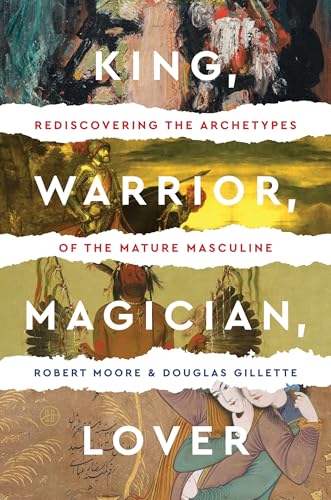
King, Warrior, Magician, Lover
Robert Moore & Douglas Gillette
View on Amazon →
The Rational Male
Rollo Tomassi
View on Amazon →
As an Amazon Associate, The Masculinity Matrix earns from qualifying purchases.