masculinity · personal development
Iron John vs 12 Rules for Life: Two Paradigms of Male Initiation for the Modern Man
C. V. WoosterApril 2, 202627 min read
*This article contains Amazon affiliate links. If you purchase through them, The Masculinity Matrix earns a small commission at no extra cost to you.*
# Iron John vs 12 Rules for Life: Two Paradigms of Male Initiation for the Modern Man
**Iron John vs 12 Rules for Life** represents a fascinating and crucial comparison for men seeking guidance in navigating contemporary masculinity. Robert Bly's *Iron John* offers a mythological, archetypal journey rooted in ancient wisdom and the "Wild Man" concept, emphasizing deep emotional excavation and reconnection with primal masculine energies. Jordan Peterson's *12 Rules for Life*, conversely, presents a more pragmatic, empirically-informed framework for individual responsibility, order, and meaning-making in a chaotic world. Both offer powerful, though distinct, pathways for male initiation and personal development, addressing the profound hunger for meaning and direction that many men experience today.
## Table of Contents
1. [The Enduring Quest for Male Initiation](#the-enduring-quest-for-male-initiation)
2. [Robert Bly's Iron John: Reclaiming the Wild Man](#robert-blys-iron-john-reclaiming-the-wild-man)
3. [Jordan Peterson's 12 Rules for Life: Order in Chaos](#jordan-petersons-12-rules-for-life-order-in-chaos)
4. [Core Philosophical Underpinnings: Myth vs. Pragmatism](#core-philosophical-underpinnings-myth-vs-pragmatism)
5. [Approaches to Male Development: Internal vs. External](#approaches-to-male-development-internal-vs-external)
6. [The Modern Man's Dilemma: Choosing a Path](#the-modern-mans-dilemma-choosing-a-path)
7. [Integrating Both Paradigms for a Holisitic Masculinity](#integrating-both-paradigms-for-a-holisitic-masculinity)
## The Enduring Quest for Male Initiation
The modern world, for all its technological marvels and societal advancements, often leaves men feeling adrift, disconnected from a clear sense of purpose or identity. Traditional rites of passage, once integral to guiding boys into manhood, have largely dissolved, leaving a void that many men struggle to fill. This absence of structured initiation can manifest as a pervasive sense of aimlessness, a struggle with emotional expression, or an inability to forge deep, meaningful connections. In this context, works like Robert Bly's *Iron John* and Jordan Peterson's *12 Rules for Life* emerge as powerful cultural artifacts, each attempting to provide a map for the journey from boyhood to mature masculinity. They speak to a deep-seated longing for guidance, for a framework that can help men understand themselves, their place in the world, and the responsibilities that come with true manhood.
### The Crisis of Modern Masculinity
The contemporary male identity is often caught between conflicting expectations. On one hand, there's the lingering pressure of traditional stoicism and self-reliance; on the other, a societal push towards greater emotional literacy and egalitarianism. This creates a complex psychological landscape where men may feel they lack the tools or the permission to explore the full spectrum of their being. The crisis isn't merely about societal roles, but about an internal fragmentation, a disconnect from deeper masculine energies and an authentic sense of self. Without clear initiation, many men remain in a state of prolonged adolescence, struggling to commit, to lead, or to find genuine fulfillment. This internal struggle is precisely what both Bly and Peterson seek to address, albeit through vastly different lenses.
### The Role of Mentorship and Guidance
In the absence of formal rites, the search for mentors and guiding philosophies becomes paramount. Men are actively seeking figures or texts that can offer wisdom, challenge their assumptions, and provide a roadmap for growth. This isn't about blind adherence but about intelligent engagement with ideas that resonate with their lived experience and their aspirations for a more complete self. Both *Iron John* and *12 Rules for Life* function as a form of distant mentorship, offering frameworks that men can internalize and apply to their own lives. They provide a language and a structure for understanding the often-unspoken challenges of male development, inviting men to embark on a journey of self-discovery and transformation.
### The Need for a Personal Philosophy
Beyond external guidance, the quest for initiation ultimately culminates in the development of a personal philosophy – a set of principles and values that inform one's actions and decisions. This philosophy acts as an internal compass, providing stability and direction in an increasingly complex world. Without such a compass, men can be easily swayed by fleeting trends, external pressures, or their own unexamined impulses. Both Bly and Peterson, in their own ways, are inviting men to construct such a philosophy, one that is robust enough to withstand the trials of life and provide a foundation for a meaningful existence. Their works are not just self-help books; they are philosophical treatises on the nature of being, responsibility, and the path to mature masculinity.
---
**📚 Recommended Reading:** The Masculinity Matrix
This book delves into the philosophical underpinnings of masculinity, offering a comprehensive framework for men to understand and embody their authentic selves in the modern world.
[Amazon link: https://www.amazon.com/dp/B0CP27878Q?tag=seperts-20]
---
## Robert Bly's Iron John: Reclaiming the Wild Man
Robert Bly's *Iron John: A Book About Men* (1990) burst onto the scene as a foundational text of the Mythopoetic Men's Movement. Drawing heavily on Jungian psychology, folklore, and poetry, Bly uses the Grimm fairy tale "Iron John" as an extended metaphor for the male journey into mature masculinity. His central thesis revolves around the concept of the "Wild Man" – not a savage or uncivilized brute, but an archetype representing deep, instinctual, and vital masculine energy that has been suppressed by modern society. Bly argues that men have become "soft" or "nice," disconnected from their primal core, and that initiation involves a dangerous, necessary descent into the underworld of the psyche to reclaim this lost energy.
### The Archetype of the Wild Man
Bly's Wild Man is a figure of immense power and vitality, often depicted as hairy, primal, and connected to the earth. He is the antithesis of the domesticated, polite, and emotionally restrained man that modern society often encourages. For Bly, the Wild Man is not about aggression or dominance, but about authenticity, passion, and a healthy connection to one's own instinctual drives. He represents the masculine soul that has been locked away, often by well-meaning but ultimately detrimental societal pressures or absent fathers. Reclaiming the Wild Man involves a process of deep introspection, confronting one's shadows, and embracing the less "acceptable" aspects of one's masculine nature, not to unleash chaos, but to integrate them into a more complete and potent self.
### The Seven Stages of Initiation
Bly outlines a symbolic journey of initiation, mirroring the narrative arc of the Iron John fairy tale. This journey is not linear but cyclical, involving a series of descents and ascents, losses and rediscoveries.
1. **The Golden Ball:** Represents the young boy's connection to his primal, instinctual self, often lost or dropped.
2. **The Wild Man in the Cage:** Symbolizes the suppressed masculine energy, locked away by societal norms or parental influence.
3. **The Key Under the Mother's Pillow:** Represents the need to separate from the mother (or the feminine principle) to reclaim one's masculine identity, often requiring a "theft" of the key, a symbolic act of rebellion and individuation.
4. **Escape into the Wilderness:** The flight with the Wild Man into the forest, a period of intense, often frightening, self-discovery and immersion in primal energies.
5. **Service to the King:** A period of humble service, often disguised, where the young man learns discipline, humility, and the value of work, without the ego getting in the way.
6. **The Three Hairs of the Wild Man:** Symbolic tasks that require courage, perseverance, and a deep connection to one's inner wisdom, often leading to a confrontation with death or profound loss.
7. **The Reclaimed Kingdom:** The integration of the wild and civilized aspects of the self, leading to mature, potent, and responsible masculinity, often culminating in marriage and kingship.
### The Role of the "Grief-Work"
A critical component of Bly's philosophy is the concept of "grief-work." He argues that many men carry unexpressed grief, particularly related to the absence of strong, initiated male figures in their lives, or the loss of their own primal masculine essence. This unacknowledged grief can manifest as anger, depression, or a general sense of malaise. Bly encourages men to engage in communal, ritualistic expressions of grief, often through drumming circles or storytelling, to release these pent-up emotions and reconnect with their deeper selves. This process is not about wallowing in sorrow but about acknowledging and processing pain as a necessary step towards emotional liberation and the reclamation of vitality.
## Jordan Peterson's 12 Rules for Life: Order in Chaos
Jordan B. Peterson's *12 Rules for Life: An Antidote to Chaos* (2018) became a global phenomenon, resonating with millions, particularly young men, who felt a profound lack of direction and meaning. Peterson, a clinical psychologist and professor, offers a pragmatic, often stark, vision of individual responsibility and the pursuit of meaning in a world he characterizes as inherently chaotic and suffering. His approach is less about mythological archetypes and more about tangible actions, psychological principles, and a call to confront the harsh realities of existence with courage and integrity. He champions the idea of the individual taking ownership of their life, striving for competence, and voluntarily shouldering responsibility as the path to overcoming suffering.
### The Primacy of Individual Responsibility
At the heart of Peterson's philosophy is the unwavering emphasis on individual responsibility. He argues that life is suffering, and the only way to mitigate this suffering and find meaning is for each person to take full ownership of their choices, actions, and the consequences thereof. This means cleaning one's room, speaking the truth, and striving for competence in all endeavors. He rejects victimhood narratives and external blame, instead challenging men to look inward and ask what they can do to improve their own lives and the lives of those around them. This call to self-authorship empowers men by placing the locus of control firmly within themselves, offering a path out of nihilism and into purposeful action.
### The Duality of Order and Chaos
Peterson's worldview is deeply rooted in the concept of the primordial duality of Order and Chaos. Order represents the known, the structured, the predictable; Chaos represents the unknown, the unpredictable, the potential for both danger and novelty. For Peterson, a meaningful life is found not by avoiding Chaos, but by voluntarily confronting it, integrating it, and building structures of Order within it. This involves stepping into the unknown, taking risks, and continually striving to improve oneself and one's environment. He argues that men, in particular, have a natural inclination to confront Chaos and impose Order, and that denying this impulse leads to resentment and pathology. This dynamic interplay is central to his understanding of human existence and the path to psychological well-being.
### The 12 Rules as Practical Directives
Peterson's rules are not abstract philosophical concepts but concrete, actionable directives designed to guide men towards a more ordered and meaningful life. They range from the seemingly mundane ("Clean your room") to the profound ("Assume that the person you are listening to might know something you don't").
1. Stand up straight with your shoulders back.
2. Treat yourself like someone you are responsible for helping.
3. Make friends with people who want the best for you.
4. Compare yourself to who you were yesterday, not to who someone else is today.
5. Do not let your children do anything that makes you dislike them.
6. Set your house in perfect order before you criticize the world.
7. Pursue what is meaningful (not what is expedient).
8. Tell the truth—or, at least, don't lie.
9. Assume that the person you are listening to might know something you don't.
10. Be precise in your speech.
11. Do not bother children when they are skateboarding.
12. Pet a cat when you encounter one on the street.
These rules, while seemingly disparate, collectively form a cohesive philosophy of self-improvement, ethical conduct, and the courageous embrace of life's challenges.
---
**📚 Recommended Reading:** 12 Rules for Life
This global bestseller offers a compelling and often challenging framework for individual responsibility, order, and meaning-making in a chaotic world, resonating deeply with men seeking direction.
[Amazon link: https://www.amazon.com/dp/0345816021?tag=seperts-20]
---
## Core Philosophical Underpinnings: Myth vs. Pragmatism
The fundamental divergence between *Iron John* and *12 Rules for Life* lies in their core philosophical underpinnings. Bly''s work is deeply rooted in mythological and archetypal thinking, drawing from ancient stories and Jungian psychology to illuminate universal patterns of male experience. Peterson, while acknowledging archetypes, grounds his philosophy in an empirical, evolutionary, and often existentialist framework, emphasizing observable behavior, psychological principles, and the practicalities of navigating a complex world. This distinction shapes their entire approach to male initiation and development.
### Bly's Mythological Lens
Bly's approach is inherently poetic and symbolic. He believes that ancient myths and fairy tales contain profound truths about the human psyche, truths that transcend cultural and historical boundaries. The story of Iron John is not just a children's tale but a symbolic map of the male psyche's journey from innocence to maturity. By engaging with these narratives, men can tap into a collective unconscious, recognizing their own struggles and aspirations within timeless archetypes. This mythological lens encourages introspection, emotional depth, and a reconnection with primal, often unconscious, forces. It's an invitation to explore the inner landscape, to understand the "why" behind our instincts through the language of story and symbol.
### Peterson's Empirical and Existential Framework
Peterson, while not dismissing myth entirely, interprets it through a more scientific and psychological lens. For him, myths are not just stories but distilled wisdom, evolutionary strategies for survival and flourishing that have been passed down through generations. His philosophy is heavily influenced by existentialism, particularly the idea that individuals are condemned to freedom and must create their own meaning in an absurd world. He combines this with an understanding of human biology, neuroscience, and clinical psychology to argue for practical, observable behaviors that lead to a more ordered and meaningful life. His emphasis is on the "how" – how to act, how to speak, how to take responsibility – rather than solely on the internal, symbolic journey.
### The Role of the Sacred
Both authors touch upon the sacred, but in different ways. Bly's sacred is often found in the deep, instinctual connection to nature, to the primal masculine energies, and to the communal ritual. It's an immanent sacred, residing within the earth and the human psyche. Peterson's sacred is more transcendent, often linked to the concept of truth, the pursuit of meaning, and the voluntary embrace of suffering as a path to higher purpose. While he avoids explicit religious dogma, his work is deeply informed by Judeo-Christian narratives and the idea of a moral hierarchy that underpins reality. For Peterson, the sacred is found in the courageous confrontation with reality and the pursuit of the highest good.
## Approaches to Male Development: Internal vs. External
The contrasting philosophical underpinnings of *Iron John* and *12 Rules for Life* naturally lead to different approaches to male development. Bly emphasizes an internal, psychological excavation, focusing on emotional release, archetypal integration, and a reconnection with primal energies. Peterson, conversely, prioritizes external action, behavioral modification, and the establishment of order in one's immediate environment as the foundation for internal well-being. While both aim for mature masculinity, their starting points and methodologies diverge significantly.
### Bly's Emphasis on Emotional and Archetypal Integration
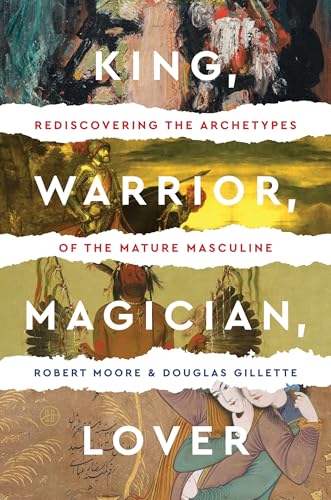
Bly's path to male development is largely an inward journey. He believes that modern men are often emotionally stunted, unable to access or express the full range of their feelings, particularly grief and anger. His work encourages men to delve into their unconscious, confront their "shadow" aspects, and integrate the various masculine archetypes (King, Warrior, Magician, Lover, as explored by Moore and Gillette, who were influenced by Bly). This process involves:
* **Emotional Excavation:** Unearthing buried emotions, particularly grief related to father wounds or societal expectations.
* **Mythological Reflection:** Using stories and symbols to understand psychological patterns and archetypal forces.
* **Communal Ritual:** Engaging in group activities (like drumming circles) to foster emotional release and male bonding.
* **Reclaiming the "Golden Ball":** Reconnecting with the innate, joyful, and instinctual self lost in childhood.
This approach suggests that true change comes from within, from a profound shift in one's internal landscape that then naturally manifests in external behavior.
### Peterson's Focus on Behavioral and Environmental Order
Peterson's developmental path is more outwardly focused, emphasizing concrete actions and the establishment of order. He argues that by first bringing order to one's immediate environment and behavior, internal psychological states will naturally improve. His methodology involves:
* **Practical Discipline:** Implementing daily routines, cleaning one's physical space, and maintaining personal hygiene.
* **Truth-Telling:** Cultivating honesty in speech and action, which he sees as crucial for psychological integrity and navigating reality.
* **Competence Building:** Striving for excellence in one's work and personal endeavors, which builds self-esteem and respect.
* **Voluntary Responsibility:** Actively seeking out and shouldering burdens, which he believes is the primary source of meaning.
For Peterson, psychological well-being is not just a matter of internal processing but is deeply intertwined with one's actions in the world and the structure one imposes on their life.
### Comparison Table: Iron John vs. 12 Rules for Life
| Feature | Iron John (Robert Bly) | 12 Rules for Life (Jordan Peterson) |
| :---------------------- | :------------------------------------------------------ | :----------------------------------------------------------------- |
| **Primary Focus** | Reclaiming primal masculine energy, emotional depth | Individual responsibility, order, meaning-making |
| **Core Methodology** | Mythological interpretation, archetypal psychology | Pragmatic rules, behavioral modification, existential philosophy |
| **View of Masculinity** | "Wild Man" archetype, instinctual, deep, integrated | Competent, responsible, ordered, truth-seeking |
| **Key Challenge** | Suppression of the "Wild Man," emotional disconnect | Confronting chaos, nihilism, lack of individual responsibility |
| **Path to Initiation** | Internal journey, grief-work, ritual, symbolic descent | External action, truth-telling, competence, voluntary suffering |
| **Outcome** | Integrated, emotionally rich, potent masculinity | Meaningful, responsible, orderly, resilient individual |
| **Tone** | Poetic, mystical, introspective | Direct, intellectual, challenging, often confrontational |
### Case Study: The Man Adrift
**Case Study: Mark's Situation — Before/After**
**Before:** Mark, 32, felt a profound sense of aimlessness. He drifted between jobs, struggled with commitment in relationships, and often felt a low-grade depression he couldn't articulate. He spent most evenings playing video games, feeling a vague dissatisfaction but lacking the motivation to change. He felt "soft" and disconnected from any sense of masculine potency, often feeling overwhelmed by the demands of adult life. He yearned for purpose but didn't know where to start.
**After (Applying Bly's principles):** Mark attended a men's retreat focused on mythopoetic themes. Through guided meditation, drumming, and storytelling, he began to explore his relationship with his emotionally distant father and the societal pressures that had led him to suppress his anger and sadness. He engaged in "grief-work," allowing himself to feel and express long-buried emotions in a safe, communal space. This internal excavation helped him reconnect with a deeper, more instinctual part of himself he recognized as his "Wild Man." He started journaling, paying attention to his dreams, and found a newfound sense of emotional authenticity and a clearer understanding of his own desires and boundaries. He began to feel a quiet strength emerge from within.
**After (Applying Peterson's principles):** Mark, feeling adrift, stumbled upon *12 Rules for Life*. He started by "cleaning his room"—literally and metaphorically. He organized his apartment, created a daily schedule, and committed to exercising regularly. He began speaking more truthfully in his interactions, even when it was uncomfortable, and took on more responsibility at his job, striving for competence. He stopped blaming external circumstances for his dissatisfaction and focused on what he could control. This external ordering of his life led to a significant reduction in his anxiety and depression. He started to feel a sense of agency and purpose, realizing that by taking small, consistent actions, he could build a life of meaning.
In both hypothetical "After" scenarios, Mark finds significant improvement, demonstrating how different approaches can lead to positive change depending on the individual's needs and starting point.
## The Modern Man's Dilemma: Choosing a Path
For the modern man seeking guidance, the choice between the mythological depth of *Iron John* and the pragmatic structure of *12 Rules for Life* is not always straightforward. Both offer compelling visions of masculinity, but they speak to different aspects of the male psyche and address different types of existential challenges. The dilemma often lies in identifying which path resonates more deeply with one's current needs, or whether a synthesis of both might be the most effective strategy. This choice reflects a broader tension in contemporary self-help and philosophical discourse: the balance between internal exploration and external action, between understanding the self and mastering the world.
### When to Embrace the Wild Man
A man might find himself drawn to *Iron John* if he feels:
* **Emotionally Stunted:** A profound inability to access or express deep emotions, particularly grief, anger, or joy.
* **Disconnected from Instinct:** A sense of being overly rational, "nice," or domesticated, lacking vitality or passion.
* **A Hunger for Meaning beyond the Material:** A yearning for spiritual or archetypal understanding that goes beyond empirical facts.
* **A Need for Communal Male Bonding:** A desire to connect with other men in a way that fosters emotional vulnerability and shared experience, often through ritual.
* **Overwhelmed by Societal Expectations:** Feeling crushed by external pressures to conform, leading to a loss of authentic self.
In such cases, the deep dive into myth, the exploration of the "Wild Man," and the emphasis on emotional excavation can provide a crucial antidote to modern alienation. It's a path for those who need to reconnect with their primal source of energy and integrate their shadow.
### When to Embrace Order and Responsibility
Conversely, a man might find *12 Rules for Life* more immediately impactful if he is struggling with:
* **Aimlessness and Lack of Direction:** A pervasive sense of not knowing what to do with his life, leading to procrastination and inaction.
* **Nihilism or Existential Despair:** A belief that life is meaningless, leading to apathy or cynicism.
* **Disorganization and Lack of Discipline:** An inability to maintain order in his personal life, leading to chaos and inefficiency.
* **Victim Mentality:** A tendency to blame external circumstances or others for his problems, rather than taking personal agency.
* **Inability to Speak Truthfully:** A struggle with honesty, leading to self-deception or manipulative behavior.
For these men, Peterson's clear, actionable rules and his call to voluntary responsibility can provide the necessary structure and impetus to begin building a more ordered and meaningful existence. It's a path for those who need to establish a foundation of competence and integrity.
### The Danger of Imbalance
Both paths, if pursued exclusively and without balance, carry their own potential pitfalls. A man who delves too deeply into the "Wild Man" without grounding in external responsibility might become self-indulgent, emotionally volatile, or neglectful of his duties. He might mistake primal emotional release for mature action. Conversely, a man who rigidly adheres to Peterson's rules without any internal emotional excavation might become overly rigid, emotionally repressed, or prone to resentment, mistaking external order for genuine inner peace. The ideal path often involves a discerning engagement with both, understanding that the internal and external realities of masculinity are deeply interconnected.
## Integrating Both Paradigms for a Holisitic Masculinity
While *Iron John* and *12 Rules for Life* offer distinct approaches, they are not mutually exclusive. In fact, for the modern man seeking a truly holistic and robust masculinity, integrating insights from both paradigms can lead to a more complete and resilient self. A man who understands his archetypal depths and his emotional landscape (Bly) while simultaneously taking rigorous responsibility for his actions and ordering his external world (Peterson) is arguably better equipped to navigate the complexities of contemporary life. This integration involves a conscious effort to bridge the gap between the internal, mythical realm and the external, pragmatic reality.
### The Synergy of Inner and Outer Work
The most potent form of male initiation often involves a dynamic interplay between inner and outer work. Imagine a man who has deeply explored his "Wild Man" (Bly), understanding his primal instincts, his emotional wounds, and his authentic desires. This internal clarity can then inform his external actions, allowing him to pursue meaning (Peterson) with greater conviction and purpose. Conversely, a man who has diligently ordered his life, taken responsibility, and built competence (Peterson) creates a stable foundation upon which to safely explore his deeper emotional and archetypal landscape (Bly). The external structure provides the container for the internal chaos, and the internal wisdom provides the direction for the external structure.
### Practical Steps for Integration: A Framework
**Step 1 of 3: Cultivate Self-Awareness (Bly's Influence)**
* **Journaling:** Regularly write about your feelings, dreams, and reactions to events. Pay attention to recurring symbols or emotional patterns.
* **Mythological Reflection:** Read myths, fairy tales, and epic poems. Reflect on how the characters' journeys and struggles mirror your own. Consider which archetypes resonate with you.
* **Emotional Literacy:** Actively work to identify and name your emotions. Practice expressing them constructively, perhaps with a trusted friend, partner, or therapist.
* **Engage with Nature:** Spend time in wild, untamed spaces. Allow yourself to feel connected to something larger and more primal than yourself.
**Step 2 of 3: Embrace Responsibility and Order (Peterson's Influence)**
* **"Clean Your Room":** Start with your immediate environment. Organize your living space, your digital life, and your schedule.
* **Set Attainable Goals:** Define clear, specific goals for your personal and professional life. Break them down into actionable steps and work diligently towards them.
* **Practice Truth-Telling:** Commit to speaking honestly, both to yourself and to others. Confront uncomfortable truths rather than avoiding them.
* **Develop Competence:** Identify areas where you want to improve (e.g., a skill, a hobby, your physical fitness) and dedicate time and effort to mastering them.
* **Shoulder Burdens Voluntarily:** Look for opportunities to take on responsibility, whether in your family, community, or work. See these as opportunities for growth and meaning.
**Step 3 of 3: Bridge the Gap with Conscious Action**
* **Align Values and Actions:** Use your newfound self-awareness (from Step 1) to ensure your responsible actions (from Step 2) are truly aligned with your deepest values and authentic masculine self. For example, if your "Wild Man" yearns for creative expression, ensure your ordered life includes time and space for that.
* **Reflect on Your "Why":** Regularly ask yourself *why* you are taking certain actions. Is it out of genuine purpose, or merely external obligation? Use Bly's insights to connect Peterson's rules to a deeper, more meaningful narrative.
* **Seek Mentorship:** Find men who embody aspects of both the "Wild Man" and the "Responsible Man." Learn from their experiences and perspectives.
* **Integrate Ritual and Routine:** Combine the structure of routine (Peterson) with the meaning of ritual (Bly). For example, a morning routine could include a moment of reflection or a symbolic act that connects you to your deeper purpose.
---
**📚 Recommended Reading:** Iron John
This seminal work explores the mythological underpinnings of male psychology, using ancient fairy tales to guide men back to their primal, instinctual "Wild Man" and reclaim lost masculine vitality.
[Amazon link: https://www.amazon.com/dp/0306813769?tag=seperts-20]
---
### The Integrated Man: A Vision
The integrated man is not a contradiction but a synthesis. He is emotionally intelligent and deeply connected to his instincts, yet also highly responsible, disciplined, and capable of creating order. He understands the power of myth and symbol, using them to navigate his inner world, while simultaneously engaging with the external world with competence and integrity. He is both wild and cultivated, primal and refined, capable of both deep feeling and decisive action. This holistic approach to masculinity offers a path not just to survival, but to flourishing in a world that desperately needs men who are both strong and sensitive, purposeful and profound.
## Frequently Asked Questions
**Q: What is the main difference between "Iron John" and "12 Rules for Life"?**
A: "Iron John" focuses on reclaiming primal masculine energy through mythological interpretation and emotional excavation, emphasizing an internal journey. "12 Rules for Life" emphasizes individual responsibility, order, and meaning-making through pragmatic actions and behavioral modification, focusing on external conduct.
**Q: Which book is better for men struggling with emotional expression?**
A: "Iron John" is generally more suited for men struggling with emotional expression, as it delves into the suppression of feelings, particularly grief and anger, and encourages reconnection with deeper emotional and instinctual aspects of the self through mythological and ritualistic approaches.
**Q: Which book is better for men struggling with discipline and direction?**
A: "12 Rules for Life" is highly effective for men struggling with discipline, aimlessness, and a lack of direction. Its pragmatic rules provide a clear, actionable framework for establishing order, taking responsibility, and pursuing meaning through concrete behaviors.
**Q: Can "Iron John" and "12 Rules for Life" be read together?**
A: Absolutely. Many men find that reading both books in conjunction offers a more holistic approach to male development. "Iron John" can provide the internal context and emotional depth, while "12 Rules for Life" offers the practical framework for external action and responsibility, creating a powerful synergy.
**Q: Are these books considered "toxic masculinity"?**
A: Neither book promotes "toxic masculinity" in the common pejorative sense. Bly's "Wild Man" is about authentic, integrated masculinity, not aggression or dominance. Peterson's emphasis on responsibility and truth is about constructive engagement with the world, not misogyny or oppression. Both aim to help men become more complete and virtuous individuals.
**Q: What is the "Wild Man" concept in "Iron John"?**
A: The "Wild Man" in "Iron John" is an archetype representing deep, instinctual, and vital masculine energy that has been suppressed by modern society. It's not a savage brute but a symbol of authenticity, passion, and a healthy connection to one's primal drives, essential for mature masculinity.
**Q: What is the significance of "clean your room" in "12 Rules for Life"?**
A: "Clean your room" is a metaphorical and literal directive in "12 Rules for Life." It signifies the importance of starting with small, manageable acts of ordering one's immediate environment as a foundation for taking on greater responsibilities and bringing order to one's life and the world.
**Q: Do these books offer a complete guide to male initiation?**
A: While both books offer profound insights and powerful frameworks, no single book can provide a "complete" guide to male initiation. They serve as valuable maps and tools, but true initiation is a lifelong, personal journey that often involves real-world experiences, mentors, and ongoing self-reflection.
## Conclusion + CTA
The journey of male initiation in the modern world is complex, fraught with challenges, and deeply personal. Both Robert Bly's *Iron John* and Jordan Peterson's *12 Rules for Life* stand as monumental contributions to this ongoing quest, each offering a distinct yet powerful lens through which men can understand themselves and their place in the world. Bly invites us into the rich, mythological depths of the male psyche, urging us to reclaim our primal, instinctual "Wild Man" and confront emotional wounds through deep introspection and ritual. Peterson, conversely, calls us to action, to embrace individual responsibility, impose order on chaos, and pursue meaning through truth-telling and competence.
Ultimately, the most robust path to mature masculinity may not lie in choosing one over the other, but in a discerning integration of both. The man who understands his archetypal depths and emotional landscape can apply Peterson's rules with greater wisdom and purpose. The man who has ordered his external world can create a stable container for the profound, sometimes chaotic, work of inner exploration. By weaving together the mythological and the pragmatic, the internal and the external, men can forge a holistic masculinity that is both deeply authentic and powerfully effective, capable of navigating the complexities of the 21st century with integrity and strength.
The Masculinity Matrix releases October 1, 2026. [Join the early access list](https://themasculinitymatrix.com/#newsletter) to be notified the moment it drops — and get the free 20-page reader magnet *The Five Masculine Wounds* instantly.
Share This Dispatch
Continue Reading
MM
masculinity
How to Build Mental Toughness: A Step-by-Step Guide for Men Who Want to Stop Quitting in 2024
Apr 2, 202629 min
MM
masculinity
Emotional Stoicism vs. Emotional Intelligence: What Men Actually Need in 2026
Apr 2, 202621 min
MM
masculinity
The Discipline Gap: How Modern Men Can Forge Unbreakable Daily Habits in 2024
Apr 2, 202626 min
Further Reading
The Rational Male
Rollo Tomassi
View on Amazon →
King, Warrior, Magician, Lover
Robert Moore & Douglas Gillette
View on Amazon →

12 Rules for Life
Jordan B. Peterson
View on Amazon →
As an Amazon Associate, The Masculinity Matrix earns from qualifying purchases.
Built With
This Site Was Built by Manus AI
The Masculinity Matrix — from the autoblog engine to the email sequences to this very page — was designed and built autonomously by Manus AI. If you're building something serious, it's worth a look.
Try Manus AI →